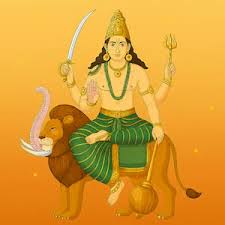
The Seventh volume in the Predictive Astrology series explores an in-depth study of the characteristics, strengths, weaknesses, and other significations of the planet Mercury.
Mercury:
Mercury is considered the Prince among the Navagrahas. In Sanskrit, it is known by several names, including Somaya and Rohinaya. Mercury represents maternal cousins, friends, communication, intelligence, and logic. It governs analysis, penmanship, and those in intellectual or specialized professions such as mathematicians, astrologers, and scholars. Interestingly, due to its association with wit and cleverness, it is also linked to thieves.
Characteristics of a strong Mercury:
When Mercury is well-placed such as in its own sign of Mithuna (Gemini), exalted in Kanya (Virgo), or conjunct/aspected by benefic planets like Jupiter it bestows the following:
Mental Agility- A sharp, adaptable mind with exceptional communication skills and a great sense of humor. Strong business acumen, analytical prowess, and a natural affinity for marketing and sales. Eloquent and witty speech, excellent networking abilities, and a retentive memory. A knack for learning multiple languages and picking up technical skills, particularly in computer science. A heightened sense of intuition and the ability to trust one's gut feelings.
Characteristics of a weak Mercury:
Mercury is considered weak when placed in its debilitated sign, Meena (Pisces), or when afflicted by malefic planets such as Saturn, Rahu, or Ketu. A poorly placed Mercury may lead to:
· An overly critical or doubting nature, which can manifest as nagging, obsessiveness, or disruptive behavior. It may also lead to an inflated sense of self-importance. Issues such as stammering or stuttering, a poor memory, and a persistent state of mental fog or depression. A tendency toward anxiety, panic attacks, and repetitive behaviors (OCD). It may also result in a withdrawn, introverted personality marked by jealousy and oversensitivity. Difficulty in maintaining logical thought, leading to irrational decision-making.
Physical features:
A strong Mercury gives a beautiful physique, youthful facial features, and excellent skin texture.
Health:
Physically, Mercury governs the nervous system and various internal processes. When afflicted, it is associated with the following diseases:
· Lack of "digestive fire" (Agni).
· Respiratory issues such as lung diseases and asthma.
· Kidney ailments.
· Digestive problems like constipation or dysentery.
· Various skin ailments
Facts about Planet Mercury:
Deity: Goddess Saraswati / Lord Vishnu
Element: Earth
Rasi(zodiac sign): Mithuna(Gemini) & Kanya(Virgo)
Caste: Vaisyah (Merchant)
Color: Green
Day: Wednesday
Body part: Skin, Nervous system, Brain
Gem: Emerald, Onyx
Metal: Brass
Family: Maternal relatives
Season: Sharad rutu (Autumn) – October to November
Element: Earth
Plants: Plants that do not bear fruit
Places: Places of play and gaming
Gender: Neutral
Direction: North
Aspects: 7th house (directly opposite)
Guna : Rajas
Exaltation: Kanya(Virgo)
Debilitation: Meena (Pisces)
Friendly planets: Sun and Venus
Neutral planet: Mars, Jupiter, Saturn, Rahu, Ketu
Enemy Planet: Moon
Transit time: 21 to 30 days
Lord of nakshatras: Aslesha, Revati and Jyestha
Remedies for Mercury:
To balance or strengthen the energy of Mercury in one's life, the following traditional remedies are recommended:
· Offer prayers to Lord Vishnu in any of His forms (such as Krishna or Rama), as He is the presiding deity of Mercury
· Feed birds with soaked green gram (moong dal).
· Donate green grass to a cow, particularly on Wednesdays.
· Provide food or green items (vegetables, green lentils, or clothing) to the needy on Wednesdays.
· Seek the blessings of elders from your maternal side.
Mythology of Mercury:
The Moon God, Chandra, was an exceptionally handsome and brilliant disciple of Brihaspati (Jupiter), the Guru of the Devas. However, his brilliance led to arrogance. During his time at the ashram, Chandra and Tara, Brihaspati’s wife, became infatuated with one another. While Jupiter was away, the two fled to the Moon's kingdom.
Upon discovering the betrayal, Brihaspati was filled with righteous anger. He demanded Tara's return, but Chandra refused, claiming she had come of her own free will. This personal dispute escalated into a cosmic crisis known as the Tarakamaya War, Devas led by Indra and supported by Lord Rudra, they fought for Brihaspati to uphold the sacred teacher-student dharma. Asuras led by Shukracharya (Venus), who was a rival to Brihaspati, they supported Chandra to weaken the Gods. The battle became so fierce that it threatened to destabilize the entire universe.
To prevent total destruction, Lord Brahma, the Creator, intervened. He commanded Chandra to return Tara to Brihaspati. Although deeply attached, Chandra obeyed the Creator's direct order and sent her back.
Upon Tara's return, Brihaspati realized she was pregnant. When he demanded to know the father's identity, Tara remained silent in shame. Remarkably, the child spoke from within her womb, demanding to know his own lineage. Brahma eventually persuaded Tara to speak, and she whispered that the child belonged to Chandra.
When the boy was born, his radiance and mental acuity were so vast that they surpassed both Chandra and Brihaspati. Impressed by his brilliance, both sought to claim him. Brahma mediated the situation, confirming Chandra as the biological father but decreeing that the child be raised with the wisdom of Brihaspati’s lineage. Brahma named the boy Budha, meaning "The Awakened" or "The Intelligent One."